
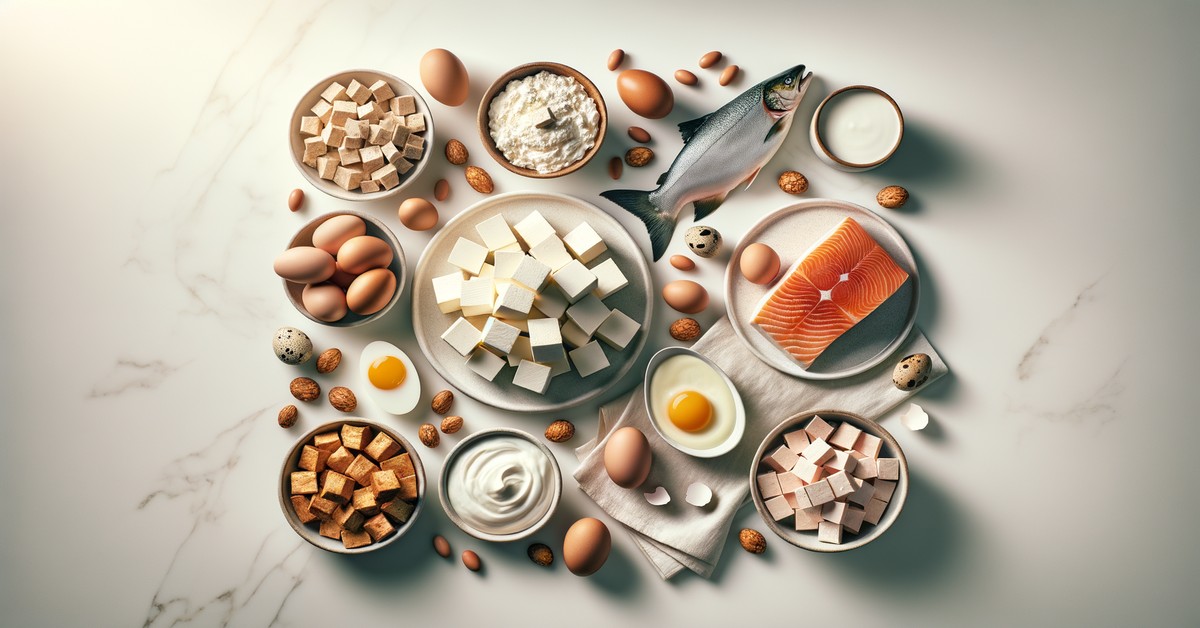
Hair is made almost entirely of keratin, a structural protein. So it seems logical that eating more protein would mean more hair growth — or that skimping on protein causes shedding. The first part of that logic holds up. The second part is where most content gets it wrong.
Protein deficiency — the clinical kind — does cause hair shedding through a well-understood mechanism. But most people worrying about protein and hair loss are not clinically deficient. They are eating a normal Western diet or restricting calories moderately. The evidence that mild protein restriction in otherwise healthy people causes hair loss is thin. And the evidence that eating extra protein beyond your body’s needs will grow more hair is essentially nonexistent.
Here is what the research actually shows.
The Short Answer
Protein deficiency causes hair shedding. If you’re already meeting your protein needs, eating more won’t grow extra hair.
The research supports protein adequacy as a threshold condition for normal hair growth — not a performance variable. Below the threshold, hair suffers. Above it, more isn’t better. The question worth asking is whether you’re actually deficient, not whether protein is “good for hair” in the abstract.
Why Protein Deficiency Causes Hair Loss
Hair follicles are metabolically demanding. The hair matrix — the cells at the base of the follicle that actively produce the hair shaft — contains some of the most rapidly dividing cells in the human body. That rapid division requires a constant supply of amino acids, the building blocks of protein.
When the body faces severe protein depletion, it has to triage. Vital organs — heart, liver, kidneys — take priority. Hair follicle activity is deprioritized. The result: the follicle shortens its growth (anagen) phase, shifts into the resting (telogen) phase early, and eventually sheds the hair.
This is the mechanism behind telogen effluvium (TE) — diffuse shedding from across the scalp rather than a receding hairline or thinning crown. It is not permanent follicle damage. The follicle is intact; it has simply stopped growing hair.
A 2017 review by Guo and Katta (PMC5315033), the most thorough survey of diet and hair loss in the literature, documents this clearly. In cases of protein malnutrition — specifically kwashiorkor (protein deficiency with adequate calories) and marasmus (combined caloric and protein deficiency) — hair changes are consistent and well-described: diffuse thinning, loss of pigmentation, and a shift to telogen shedding. Acute sudden weight loss and dramatically reduced protein intake trigger the same cascade.
One important timing detail: the shedding doesn’t start immediately. Because the follicle cycles through phases, the telogen shed appears roughly three months after the nutritional insult. People who crash-dieted in January often notice significant shedding in March or April and mistakenly attribute it to something more recent.
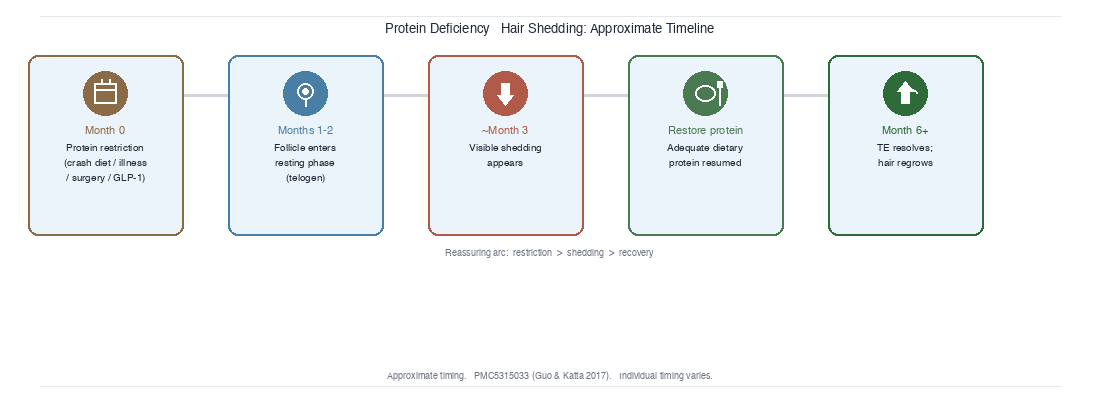
Telogen effluvium from protein restriction typically appears about 3 months after the nutritional insult. Data from Guo and Katta (PMC5315033, 2017). Individual timing varies.
Who Is Actually at Risk?
The people most likely to experience protein deficiency-related hair shedding are those with a meaningful, sustained drop in protein intake — not people who had a low-protein week.
Crash dieters. Extreme caloric restriction typically involves inadequate protein alongside inadequate total intake. This is one of the most common causes of sudden diffuse shedding in women following aggressive weight loss programs. The timeline is predictable: restrict in month one, shed in month three.
People using GLP-1 medications (Ozempic, Wegovy, Mounjaro). Rapid weight loss with suppressed appetite can push protein intake below threshold. Telogen effluvium is a documented side effect of GLP-1 therapy — partly a physiological stress response, partly a nutritional one. If you’re on a GLP-1 medication and experiencing hair shedding, protein intake is worth reviewing.
Vegans and vegetarians who aren’t tracking protein deliberately. Plant-based diets can absolutely meet protein requirements, but they require intentional food choices. Relying on incidental plant protein without attention to intake or amino acid completeness can leave gaps.
People recovering from surgery, serious illness, or eating disorders. Acute protein depletion during a medical event — a hospitalization, major surgery, a period of not eating — can trigger TE two to three months into recovery.
Bariatric surgery patients. The dramatic reduction in food volume makes deliberate protein supplementation near-mandatory. Most post-bariatric protocols include protein targets for exactly this reason.
Does Eating More Protein Grow More Hair?
This is where the evidence stops supporting the marketing.
If you’re meeting adequate protein requirements, eating more protein will not grow more hair. The research on this is consistent: protein adequacy is a necessary condition for normal hair growth, not a dose-dependent performance variable.
Medical consensus on this is clear: androgenetic hair loss is driven by DHT sensitivity and genetic predisposition, not diet. Nutritional status can influence whether you shed more or less hair, but correcting a nutritional deficit will not reverse an androgenetic process. Improving protein intake can resolve a deficiency-driven TE — it cannot address the underlying DHT mechanism driving AGA.
Think of it the way you would think about hydration. Being severely dehydrated impairs physical function. Drinking an adequate amount of water restores function. Drinking twice the adequate amount doesn’t make your muscles work twice as well. Hair and protein work the same way. The ceiling is adequacy.
No randomized controlled trial has shown that protein supplementation above the recommended daily intake improves hair growth in normally nourished people. This is worth stating plainly, because a large portion of the protein-and-hair content ecosystem implies otherwise — often by sites with something to sell. If you’ve seen similar claims made about other fitness supplements, the same threshold principle applies: see our breakdown of creatine and hair loss for a direct comparison.
What Adequate Protein Intake Looks Like
General recommendations from nutrition research:
- Sedentary adults: 0.8–1.2 g of protein per kilogram of bodyweight per day
- Active individuals: 1.4–2.0 g/kg/day
- Post-surgery or recovering from illness: Often higher, under clinical guidance
For hair, the goal is landing within these ranges consistently — not exceeding them. If you are actively restricting calories, tracking protein intake deliberately is useful to ensure you’re not inadvertently falling below threshold.
Protein quality matters. Keratin — the protein hair is primarily made from — is rich in specific amino acids including cysteine, glycine, and glutamine. Complete proteins, meaning foods containing all essential amino acids, support hair matrix function more directly. These include animal proteins (eggs, fish, poultry, dairy) and plant-based complete sources (soy, quinoa). People on plant-based diets should aim for deliberate variety or use a complete plant protein source to cover all essential amino acids.
Practical sources worth prioritizing:
| Food | Protein (per 100g) | Complete protein? |
|---|---|---|
| Eggs | ~13g | Yes |
| Chicken breast | ~31g | Yes |
| Salmon | ~25g | Yes |
| Greek yogurt | ~10g | Yes |
| Firm tofu | ~17g | Yes |
| Lentils | ~9g | No (pair with rice or grain) |
| Pea protein powder | ~75–80g¹ | Near-complete |
¹ Per 100g of pea protein isolate powder. A typical 30g scoop delivers approximately 22–25g of protein.
Protein Deficiency vs. Androgenetic Alopecia — An Important Distinction
These two causes of hair loss are frequently confused — and that confusion leads to people expecting dietary changes to fix something diet can’t address.
Protein deficiency causes TE: diffuse shedding from across the scalp, reversible once protein is restored. The follicle is intact. Recovery typically takes 3–6 months after adequate nutrition is re-established.
AGA (androgenetic alopecia) is driven by genetics and DHT sensitivity. It manifests as a progressive, patterned recession or thinning — temples and crown in men, diffuse crown thinning in women. Diet does not cause it and restoring protein will not reverse it.
Many people have both. A crash diet can trigger TE in someone who also has underlying AGA — and the combined shedding can look alarming. Correcting the protein deficit is the right first step. If shedding continues after nutrition is restored and the TE has had time to resolve, the underlying AGA needs to be evaluated separately with finasteride, minoxidil, or other evidence-based treatments.
Practical Guidance
If you’re on a GLP-1 medication and shedding: Prioritize protein at every meal. Aim for the higher end of the adequate range (1.4–2.0 g/kg). Discuss persistent hair shedding with your prescriber — they can assess whether it’s nutritional, medication-related, or both. Do not stop your medication without medical guidance.
If you’ve been crash dieting: Restore normal, adequate protein intake. Expect shedding to resolve within 3–6 months of nutritional restoration. If it doesn’t, or if the pattern looks patterned (crown, temples) rather than diffuse, an evaluation for AGA is the next step.
If you’re vegan or vegetarian and noticing shedding: Track your protein intake for a week against the 0.8–1.2 g/kg baseline. Focus on complete sources (soy, quinoa, tofu) or deliberate grain-and-legume combinations. A pea or soy protein supplement can be a practical shortcut to adequacy — not because supplements are magic, but because they make hitting the number easier.
Frequently Asked Questions
Can lack of protein cause hair loss? Yes. Protein deficiency — specifically clinical protein malnutrition — causes telogen effluvium, a form of diffuse hair shedding. This is well-established. The shedding typically appears about three months after the protein deficit begins.
How much protein do I need for hair health? The same amount you need for general health: 0.8–1.2 g per kilogram of bodyweight for sedentary adults, 1.4–2.0 g/kg for active individuals. Eating beyond this has no additional benefit for hair.
Does protein deficiency cause permanent hair loss? No. Telogen effluvium caused by protein deficiency is reversible. Once adequate protein intake is restored, the follicles return to normal cycling and hair regrows. Recovery takes 3–6 months.
Do GLP-1 drugs (Ozempic, Wegovy) cause hair loss through protein deficiency? Partly. Rapid caloric restriction and reduced appetite can push protein intake below threshold, triggering TE. But there may also be direct physiological stress responses contributing. The nutritional component can be addressed by maintaining deliberate protein intake during GLP-1 therapy.
Will a protein supplement grow my hair? Only if you are currently protein deficient. If you’re already meeting your protein needs, a supplement will not grow more hair — it will simply give you more protein than your body requires. There are no RCTs showing protein supplementation above adequate intake improves hair growth in well-nourished people. For a full breakdown of what the evidence actually supports for supplements and hair, see our guide to hair growth supplements.
What type of hair loss is caused by protein deficiency? Telogen effluvium — diffuse, non-patterned shedding from across the scalp. It is not the receding hairline pattern of androgenetic alopecia.
Conclusion
Protein deficiency causes hair loss through a clear, well-understood mechanism — and it is entirely reversible by restoring adequate protein intake. The challenge is identifying when you’re actually deficient, which is most likely during aggressive caloric restriction, GLP-1-induced appetite suppression, serious illness, or recovery from surgery.
What the evidence does not support is treating protein supplements as a hair growth booster for people who are already adequately nourished. Get enough protein consistently. If shedding continues after you’ve ruled out a deficiency and allowed adequate recovery time, investigate for androgenetic alopecia or other contributing causes — because the answer is unlikely to be more protein shakes.